Why B2B programmatic matters
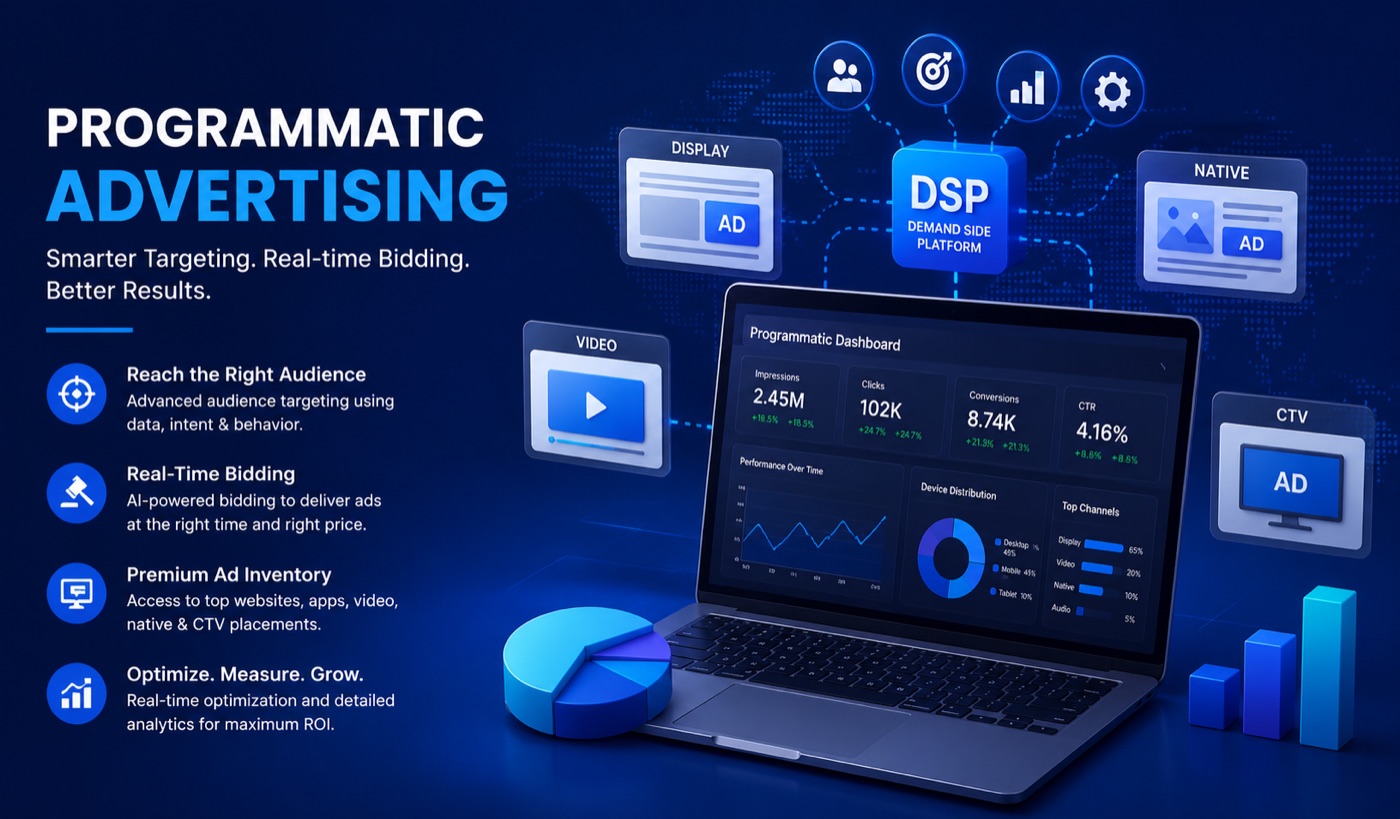
B2B buyers rarely convert after one search or one social touch. They research quietly, compare vendors, speak with teams, and come back weeks later with stronger intent. Programmatic advertising helps brands stay visible during that journey without depending only on search demand that already exists.
How to plan the audience
A strong campaign starts with audience logic. Use industry, company size, job function, content interest, intent signals, retargeting pools, and exclusions together. The goal is not to reach everyone. The goal is to reach enough of the right people often enough for the brand and offer to become familiar.
What to measure
Measure more than clicks. Track engaged visits, return visits, landing-page depth, form quality, CRM status, cost by segment, and sales feedback. These signals help you decide whether the campaign is producing useful demand or only surface-level attention.
How AdToro builds it
AdToro designs programmatic campaigns as part of a full acquisition system. Media, creative, landing pages, analytics, and CRM feedback are reviewed together so budget decisions are based on business usefulness, not isolated platform metrics.
How to apply this inside your next campaign
Start by turning the idea into a simple checklist: audience, offer, message, channel, landing page, tracking, lead routing, and follow-up. If any one of these pieces is unclear, the campaign may still generate activity, but the business outcome will be harder to understand.
The strongest teams review performance with both marketing and sales context. That means looking at campaign numbers, website behavior, form quality, CRM notes, and opportunity movement before deciding whether to scale, pause, or rebuild a campaign.
Want this applied to your campaigns?
Book a growth audit and AdToro will translate the idea into a practical action plan for your audience, media budget, and conversion funnel.
Schedule Growth Audit